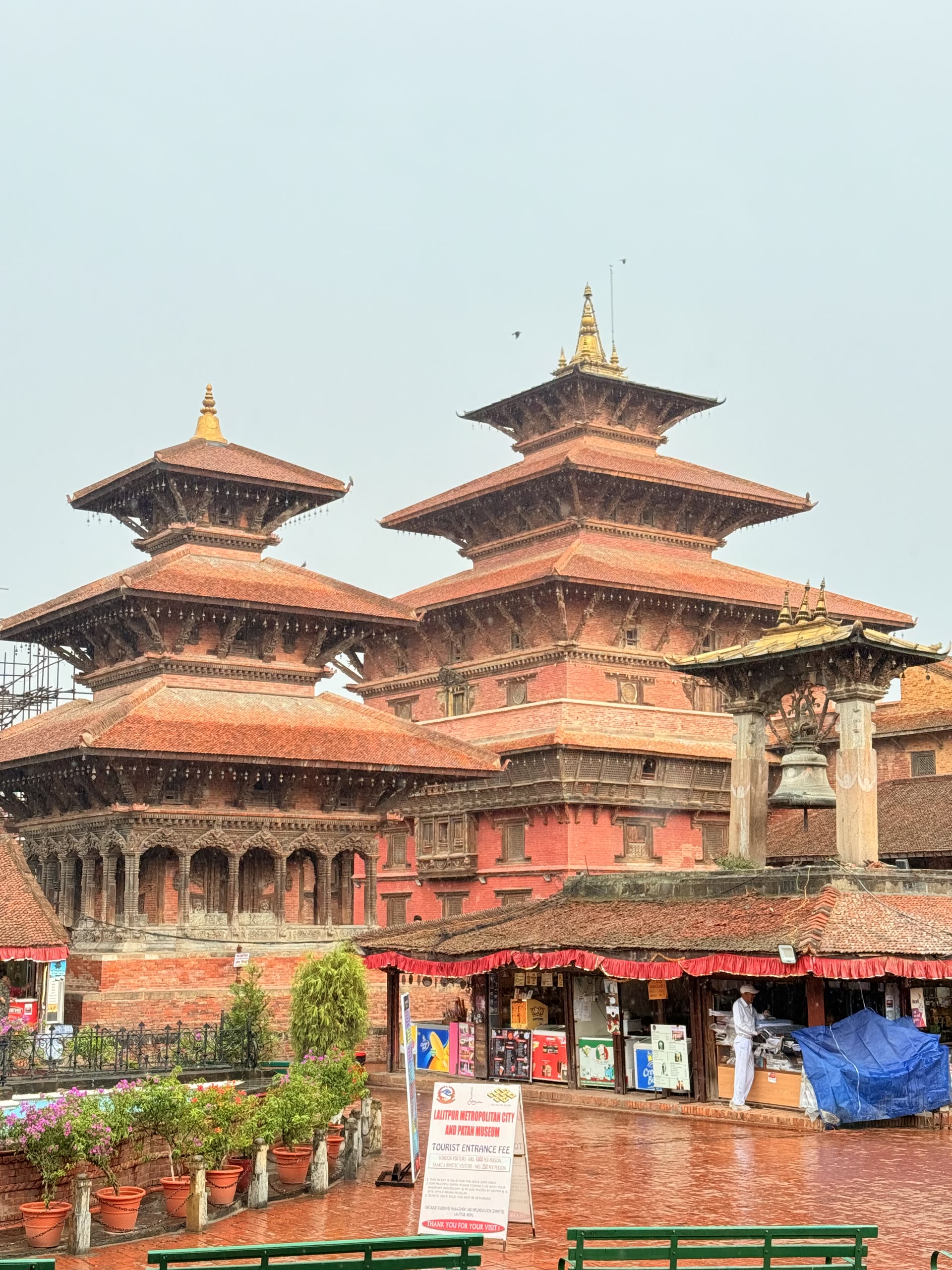
Your Local Guide
to Patan, Nepal

Everything we wish visitors knew before arriving — the best season, real festivals, food locals actually eat, and the hidden corners most tourists never find.

Best Time to Visit Patan

Patan is beautiful year-round — but the season changes everything. Here's what to expect in each.

🍂
Autumn
October – November
Crystal-clear skies, 15–25°C, post-monsoon greenery and the biggest festival window. Dashain and Tihar fall here. This is peak Patan.
Best time
🌸
Spring
March – May
Warm and pleasant (18–28°C), rhododendrons blooming, and the famous Machindranath chariot festival fills the streets through April–May.
Great
❄️
Winter
December – February
Cold mornings (4–15°C) but bone-dry skies and almost no tourist crowds. Durbar Square is yours. Great value for money.
Good value
🌧️
Monsoon
June – September
Heavy daily rain (24–32°C), lush green valley, and lively local festivals — but not ideal for long outdoor walks between temples.
With caution

Planning ahead? October–November is when we fill up fastest. If you're visiting during Dashain or Tihar, book at least 6–8 weeks in advance — those weeks sell out quickly.

Newari Festival Calendar

Patan's festivals are not performances for tourists — they are living traditions that fill the streets with music, colour and devotion throughout the year.
Jan – Feb
Maghe Sankranti
The Newari mid-winter festival — families gather, eat yam and sesame sweets, and bathe in sacred rivers at dawn to mark the sun's return northward.
Local
Feb – Mar
Holi
Streets erupt with coloured powder and water. Durbar Square becomes an open-air celebration — arrive with clothes you don't mind ruining.
Major
Apr – Jun
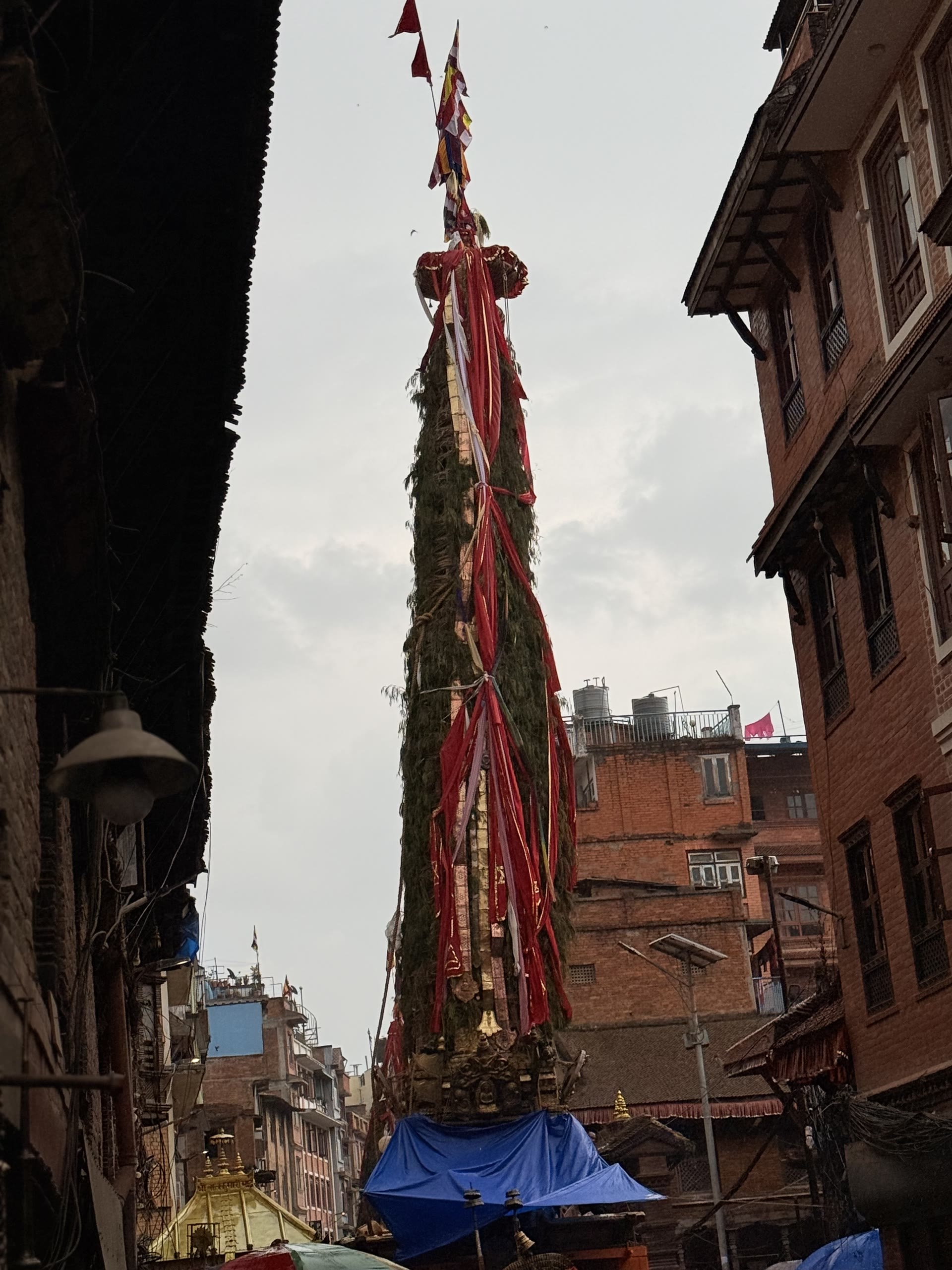
Machindranath Jatra
The great chariot festival of Patan — weeks of street processions, devotional music and offerings passing through the old city lanes.
Major
August
Janai Purnima & Gai Jatra
Sacred thread ceremony at Kumbheshwar temple, followed by the cow festival where families who lost relatives lead processions honouring the deceased.
Spiritual
Aug – Sep
Indra Jatra
The rain god's festival — the Living Goddess Kumari is carried through Kathmandu in a chariot and the entire valley celebrates for eight days.
Major
Oct – Nov
Dashain & Tihar
Nepal's two biggest festivals back to back. Dashain reunites families across the country; Tihar lights every home and street with oil lamps for five luminous nights.
Major

What to Eat in Patan

Newari cuisine is one of South Asia's most distinct food cultures — rich, fermented, and almost never found outside the Kathmandu Valley. Here's what to seek out.

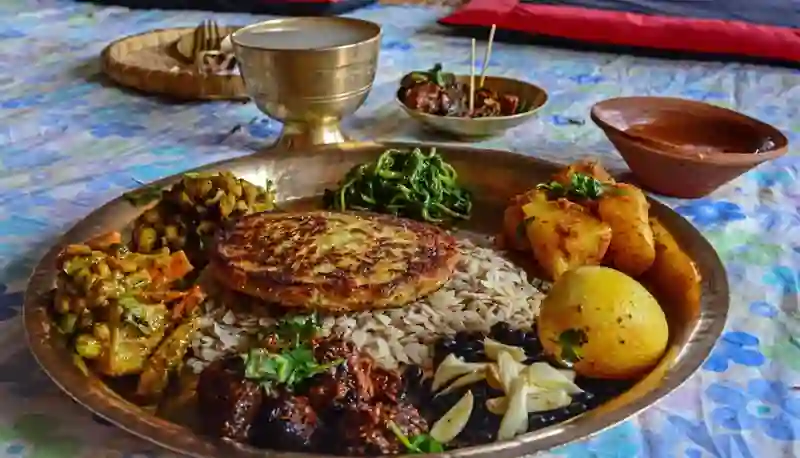
Newari Samay Baji food spread Patan
Samay Baji — the Newari Feast
The traditional Newari platter: beaten rice, buffalo meat, black soybeans, boiled egg, ginger and aila (local rice spirit). Found at tiny local eateries off Durbar Square that open only at lunchtime — ask us which ones.
Bara and Chatamari Newari street food
Bara & Chatamari
Bara are crispy lentil pancakes topped with egg or minced meat. Chatamari is the Newari rice-flour crepe with savoury toppings — often called the Newari pizza. Both are street staples, best eaten hot from the pan.
Yomari and Kwati festival food Nepal
Yomari & Kwati
Yomari is a steamed dough dumpling filled with molasses and sesame — made once a year in December. Kwati is a mixed sprouted-bean soup eaten at Janai Purnima in August. Both are worth timing your trip around.
Rooftop cafe near Patan Durbar Square
Rooftop Cafes at Durbar Square
Pull up a chair on any rooftop cafe around the square for dal bhat, momos or strong Nepali milk tea while looking out over temple rooflines built 1,000 years ago. Perfect for the golden hour between 4–6pm.
Morning vegetable market Patan Mangal Bazaar
Morning Markets
The vegetable market near Mangal Bazaar starts at sunrise — local vendors sell greens, spices and seasonal produce. Grab a cup of chiya (spiced milk tea) from a street stall and watch the city wake up around you.
Badri Homes local food recommendations Patan
Ask Us for Our List
We keep a handwritten list of our personal favourites — the tiny lunch spots, the best momo stall on the way to the square, and the rooftop with the best view and worst prices. Ask at check-in and we'll hand it to you.

Patan or Kathmandu — Where Should You Stay?

Both are in the Kathmandu Valley, 30 minutes apart by taxi. But they feel completely different. Here's our honest take as people who live in Patan.

Staying in Patan

Quieter — no roaring tuk-tuks and tourist touts
Better-preserved medieval architecture at Durbar Square
Genuinely local neighbourhood — real Newari life around you
30-min taxi to Kathmandu, Bhaktapur, Boudha for day trips
Fewer tourists — more authentic experiences, less hustle
Limited late-night bars and clubs — city quietens by 10pm

Staying in Kathmandu (Thamel)

More accommodation options at every price point
Active nightlife and international restaurants
Closer to Tribhuvan International Airport
Thamel is heavily touristed and often overwhelming
Noisier streets — traffic, generators, touts
Less authentic day-to-day Newari culture visible
Our verdict: Stay in Patan, take day trips to Kathmandu. You get the whole valley without the chaos — and you'll leave understanding Nepal rather than just having visited it.

Hidden Temples & Courtyards

Patan has over 1,200 temples. Most visitors see five. Here are the ones worth finding — and how to reach them from Badri Homes on foot.

Kwa Bahal Golden Temple Patan interior courtyard Must See

Kwa Bahal — the Golden Temple

A 12th-century Buddhist monastery hidden behind an unmarked wooden door two minutes from Durbar Square. Inside: gilded courtyards, spinning prayer wheels and monks at morning puja. The entrance is easy to miss — look for a narrow alley with marigold offerings on the step.

3 min from us Allow 30 min
Uku Bahal ancient Buddhist monastery courtyard Patan Local Favourite

Uku Bahal Courtyard

One of Patan's oldest bahals (Buddhist monastery courtyards), barely visited despite being steps from the main square. The stone carvings date to the 9th century. You'll likely have it completely to yourself.

8 min from us Allow 20 min
Mahabouddha Temple Patan thousand Buddha faces Hidden Gem

Mahabouddha — 9,000 Buddha Faces

Tucked inside a courtyard you'd walk past without a second glance. Every single brick on this tall shikhara temple has a Buddha face carved into it — over 9,000 in total. One of the most extraordinary structures in Nepal, and almost no one outside the neighbourhood knows it exists.

12 min from us Allow 30 min
Kumbheshwar five-storey temple Patan ancient Spiritual

Kumbheshwar — Patan's Five-Storey Temple

The oldest standing temple in Patan, built in 1392. Its sacred pond is said to be connected underground to the holy lake of Gosainkund high in the Himalayas. Come during Janai Purnima in August to see it come fully alive with pilgrims.

15 min from us Allow 45 min
Newari bronze artisan workshop lanes Patan Culture

The Artisan Lanes of Oku Bahal

Follow the sound of hammering to find bronze sculptors at work in centuries-old workshops. These Newari craftsmen use the lost-wax method, unchanged for 1,500 years. They're happy for visitors to watch — and to buy direct from the maker.

10 min from us Allow 1 hour
Patan Durbar Square at dusk sunset golden light Evening Pick

Durbar Square After 5pm

After the tour groups leave, the square transforms. Locals set up snack stalls, pigeons swirl over the temple roofs and the ancient stone turns gold in the last light. This is our favourite time of day here — and it costs nothing to sit and watch.

5 min from us Stay as long as you like

Getting Around Patan on Foot

Patan is a walking city. Almost everything worth seeing is within 20 minutes of Badri Homes. Here's our favourite half-day morning route.

1
Badri Homes — Start Here
Head out with a cup of tea. Saugal Tole in the early morning is quiet — locals sweeping doorsteps, vendors setting up, the smell of incense from the first puja of the day. The city is waking up around you.
Your starting point
2
Golden Temple (Kwa Bahal)
Three minutes on foot. Duck through the low entrance and enter a completely different world. Spin the prayer wheels clockwise and watch monks cross the gilded courtyard. The 7–8am session is particularly atmospheric.
3 min walk · 30 min to explore
3
Patan Durbar Square
The centrepiece of the old city. Arrive before 9am for the best light and fewest crowds. Climb the Taleju Bell tower steps for a view over the whole square. A small entry fee applies for non-Nepali visitors.
5 min walk · 1–2 hrs to explore
4
Artisan Workshops, Oku Bahal
Follow the main lane south from Durbar Square. The sound of hammering leads you to the bronze smiths. Watch the lost-wax casting process, browse the finished pieces, or just absorb the smell of molten metal in ancient lanes.
10 min walk · 30 min
5
Mahabouddha Temple
Squeeze through the narrow lanes east of the artisan quarter. The courtyard entrance looks like a storage room door — push it open. Inside, 9,000 Buddha faces carved into every brick stare back at you in silence.
5 min walk · 20 min
6
Rooftop Cafe — Rest & Views
End your walk at any rooftop cafe on the south side of Durbar Square. Order a coffee or Nepali milk tea and rest your feet while looking out over a thousand years of temple rooflines. You've earned it.
Total route: ~3 hours
Walking through Patan Durbar Square stone temples morning
What to wear: Flat, comfortable shoes — Patan's old lanes are paved with uneven stone bricks. The whole route is flat with no significant hills. Ask us for a hand-drawn map at check-in.

Ready to Experience Patan for Yourself?

All of this is on your doorstep when you stay at Badri Homes — 5 minutes walk from Durbar Square, in the heart of the old city.